
Vacuum forming creates better complex clear parts
Project at a Glance
• Clear materials expertise
• Part Trimming

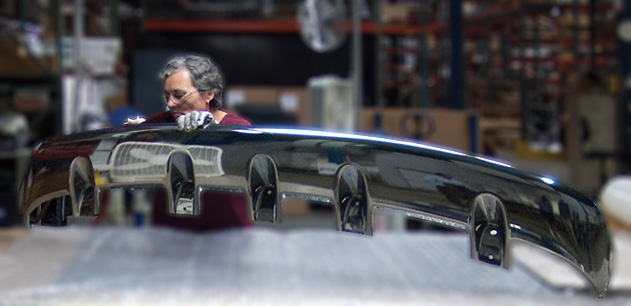
Medical diagnostics machines require systems to collect and pass sample vials inside for analysis. Similar to funnels, they reduce manual handling and increase throughput. However, technicians need a clear view to watch the vials as they are caught and stacked for processing.
Parts like this loader design have complex geometries, making them difficult to mold or form. Using clear thermoplastics is even trickier because of the extra handling involved.
Thankfully, Profile has a great deal of experience with these types of projects. Find out more about how Profile successfully processes clear materials.
Challenge:
Using clear materials adds to the complexity of hard-to-form parts
A medical device manufacturer wanted their new machine to feature a clear vial collector made from impact-resistant plastic that could provide visibility and durability.
The design demanded zero draft, an angle that’s applied to vertical walls, to provide proper fit and function. Injection molding supports the use of PETG material, which has the required chemical properties. However, this process needs draft so the parts can be removed from the mold.
The depth of this part was especially challenging. The deeper the draw, the more the plastic stretches. The parts measured 15” x 10” with a very deep draw, over 12”.
The application called for a clear, smooth finish. Two diagnostics sensors attached to the sides also required precision locating. Additionally, a chute opening on one vertical side needed to accommodate a conveyor system for moving vials.
Solution:
Deep draw vacuum forming produced superior parts

Profile used a variation of vacuum forming to produce these parts. Pre-stretching the clear PETG prior to forming accommodated the extra deep draw with zero draft.
This process also improved handling and supported better clarity. Learn how to select the proper clear thermoplastic for your project.
Undercuts were added to the part design so that actuation in the tooling allowed parts to be released without distortion.
Machined aluminum thermoforming tools are less expensive than injection molds, even after being highly polished to produce parts with a smooth uniform finish. Profile also developed trim fixtures that helped locate and attach the custom sensor blocks.
Results
The geometry of this funnel loader design made thermoforming a challenge. However, a specialized vacuum forming technique was able to meet the customer’s requirements for this application better than injection molding. The tooling also cost significantly less.
Interested in learning how Profile Plastics can help meet your needs for clear or complex parts? Setup up an introductory call to start a discussion about thermoforming.
More Success Stories
-

Twin sheet forming keeps slushie maker cool and collected
-

Twin sheet forming an air cell water pressure regulator
-

How thermoforming delivered cost-effective reach truck parts
-
Thermoforming pours on innovation for drink dispensing
-

Twin sheet forming enables lightweight surgical helmet design
-

Thermoforming slashes 50% weight & cost from medical table components
-

Innovative thermoformed enclosure supports groundbreaking medtech
-

Pressure forming close-tolerance parts for mobile mammography device
-
Use Pressure Forming to produce superior electronics housings
-

How portable product design uses twin sheet and pressure forming
-
Pressure forming lighter, more consistent medical device parts
-

Pressure forming large parts helps launch proton therapy
-
Converting metal parts to pressure formed protects against pathogens
-

Pressure formed multi-part program for dental X-ray equipment
-
Thermoforming complex materials for the transportation industry